Single Central Veneer Matched from Photos
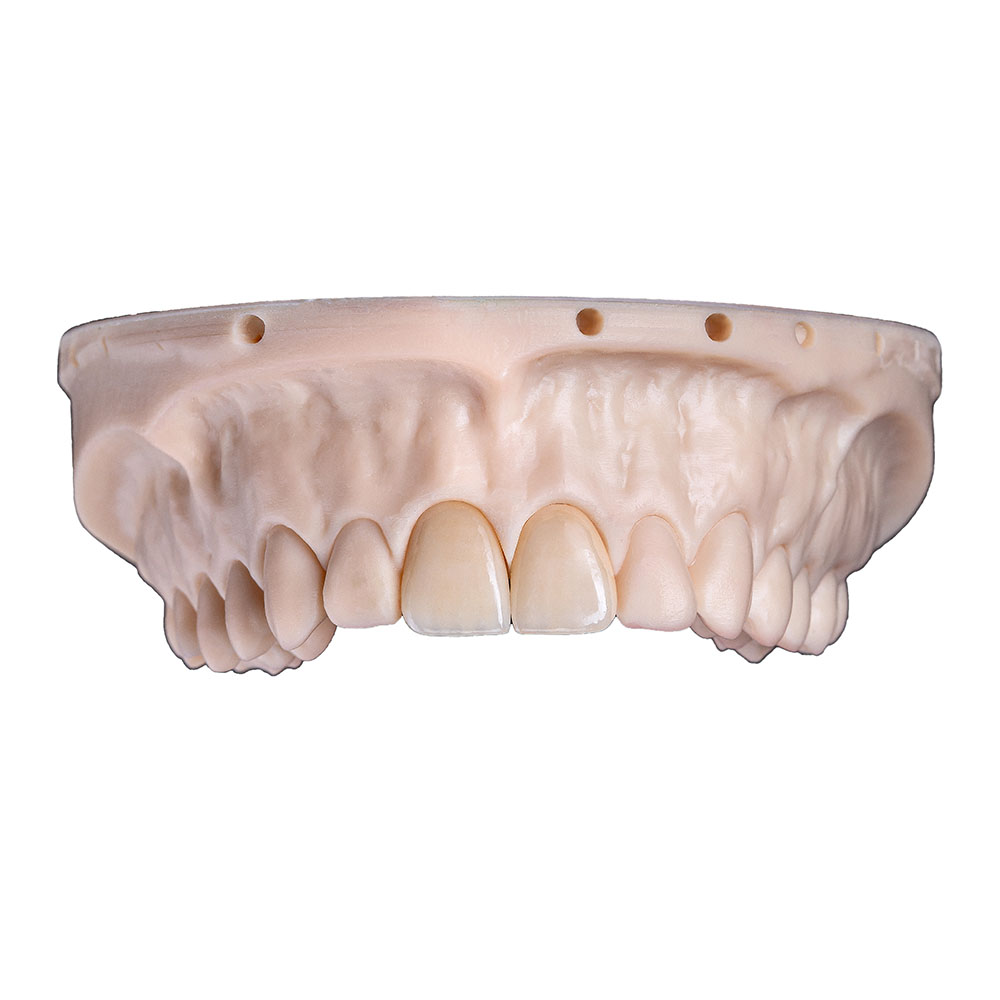
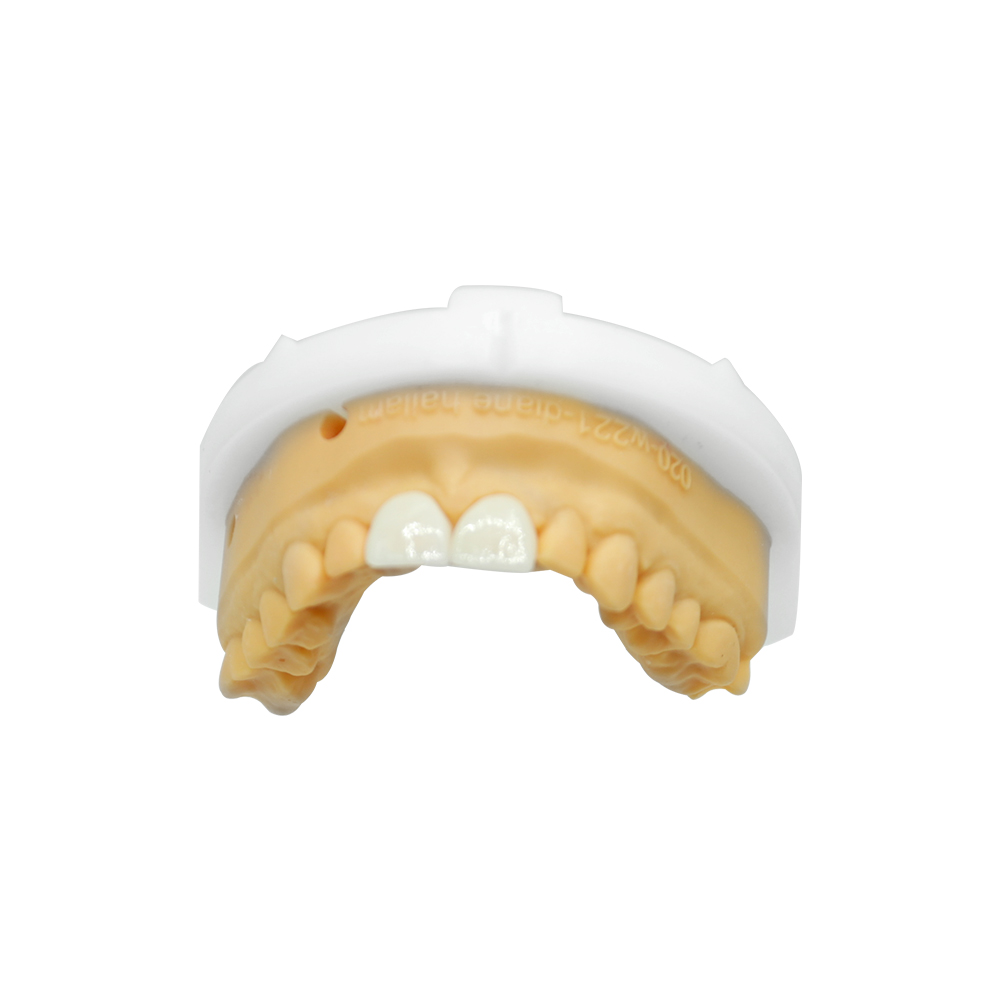
Matching one central to a natural neighbour is the most remake-prone job in aesthetic dentistry - and this case had no try-in visit to fall back on. The client had already been through one disappointing composite restoration and the patient was unwilling to accept a second revision.
We replaced chairside shade guessing with structured photo communication: daylight photos with a VITA tab, close-ups of the adjacent incisor, and a stump shade photo that determined the opacity of the ceramic. The ceramist identified the two features that make or break a single-central match - the translucency band and a faint white spot - and both were confirmed in writing before work started, then hand-replicated.
- Photo-based shade protocol that became this account's stored standard for every future case
- Ceramist-led feature analysis (translucency band, white spot, micro-texture) confirmed before layering
- Standardised-light comparison photos sent before dispatch - the client saw the match before the patient did
- First-try-in acceptance with no adjustments
Case overview
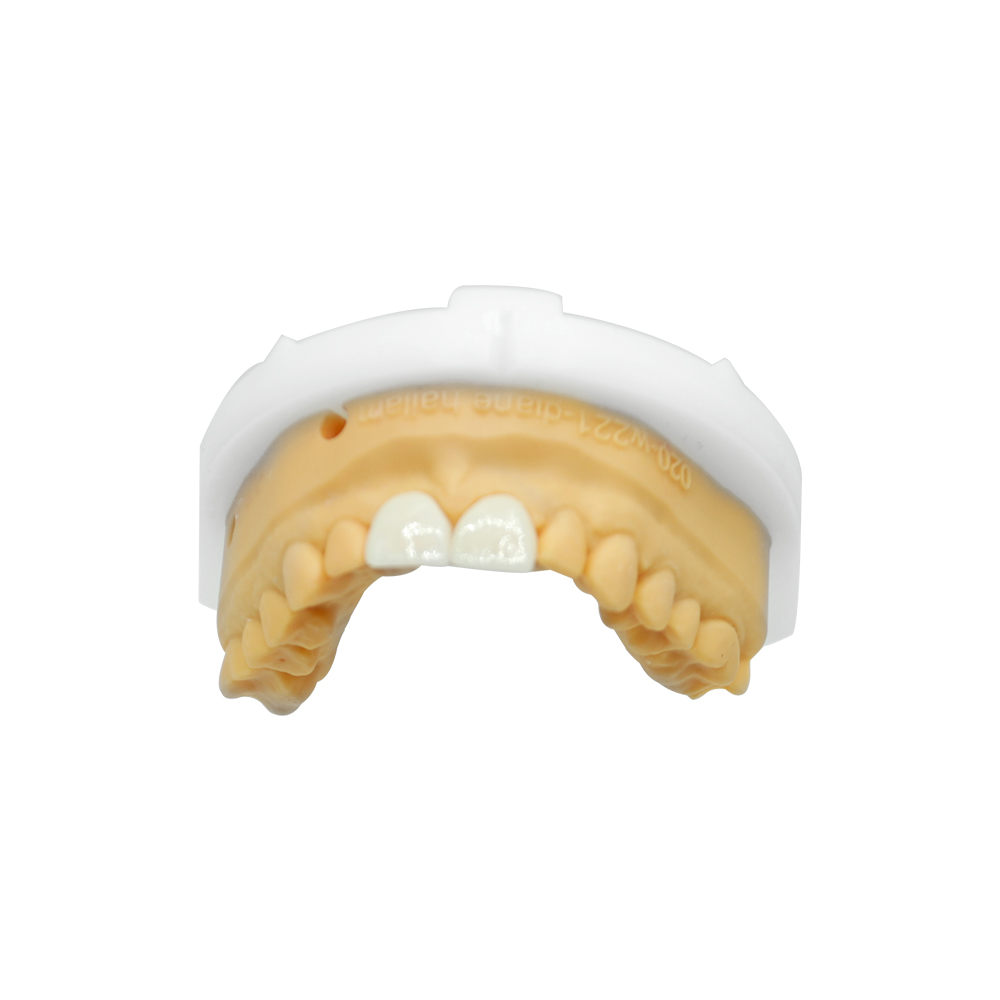
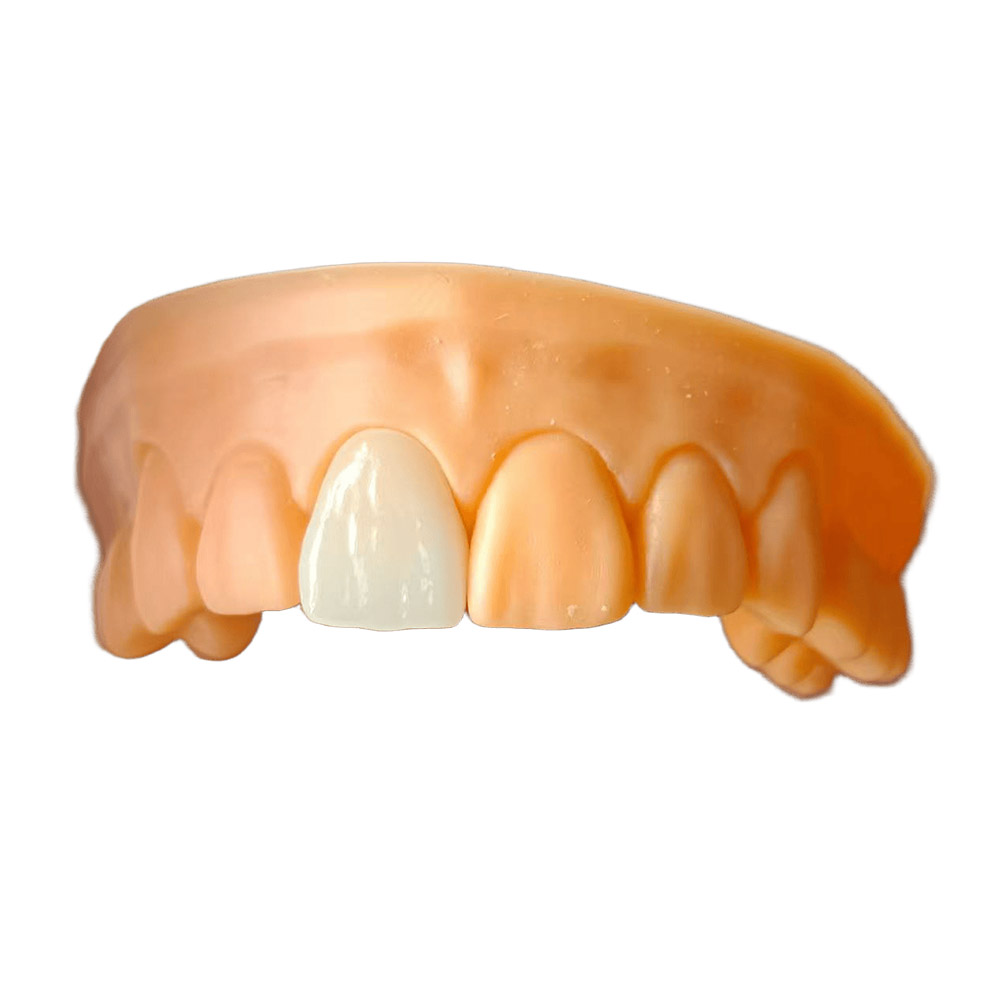
Single maxillary central incisor veneer; client clinic, Europe. De-identified.
The initial request
Match one central to a natural adjacent incisor - the hardest shade job in the lab, with no possibility of a try-in visit before final cementation.
What we received
Frontal and retracted photos with a VITA tab in frame in daylight, close-ups of the adjacent incisor, study scan, and notes on what the patient disliked about a previous composite restoration.
Technical communication
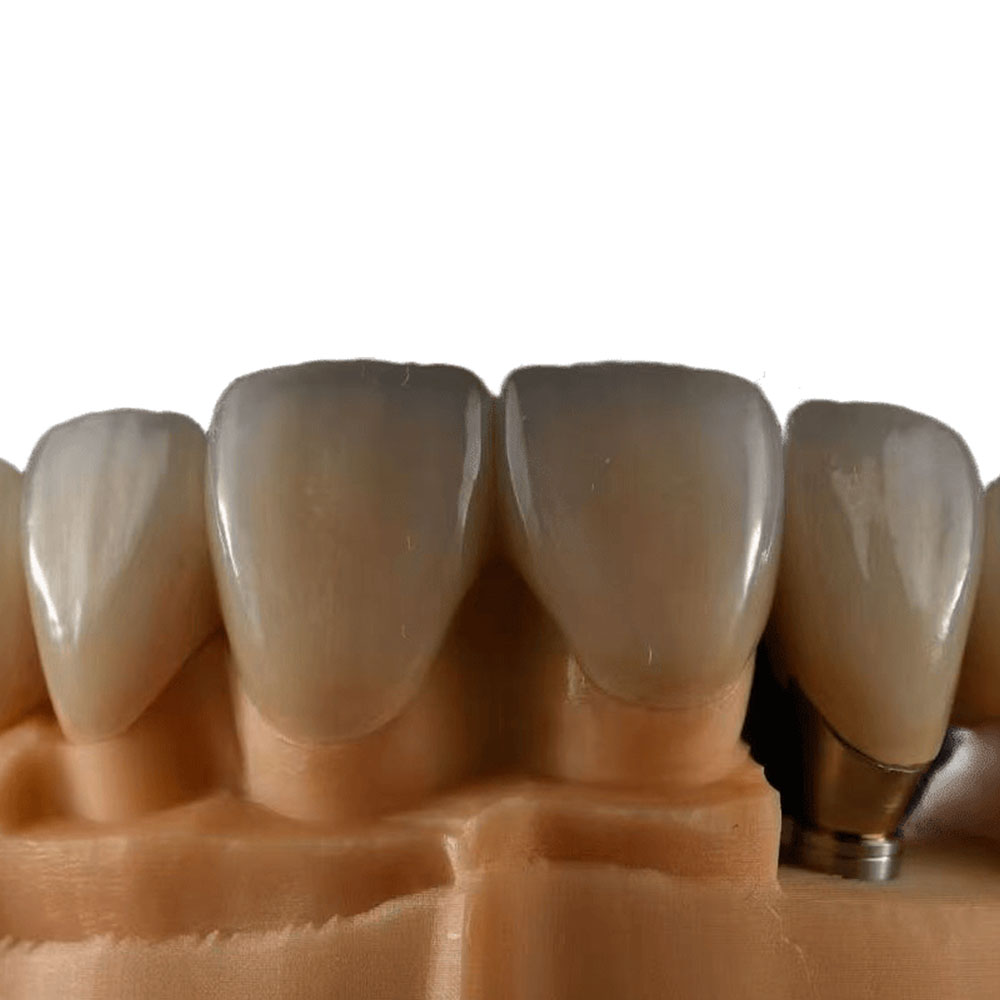
The adjacent tooth's translucency band and a faint white spot were flagged by our ceramic technician as must-replicate features; the client confirmed. The stump shade photo suggested a pressed E.max with minimal opacity - confirmed as an assumption in writing.
Materials & fabrication
Pressed E.max veneer, cut-back and layered to reproduce the translucency band; white spot and surface micro-texture added by hand. Comparison photographs against the client's tab were taken under standardised light and sent before dispatch.
Outcome
Accepted at first try-in. The client adopted photo-with-tab as the standard shade communication for their account - which is now stored in their preference profile.
Related pages
Dental Veneers · E.max · Case Studies
Ready to send your first case?
Request the price list or tell us about your first case - a named coordinator replies with the next step, not a sales script.
Get QuoteStart Your First Case