E.max Restorations
Lithium disilicate done properly: pressed or milled, layered where the smile demands it, and shade-matched under standardised light before it leaves the bench. This page covers options, submission requirements and where E.max is - and is not - the right material.
What we offer & who it is for
We produce E.max restorations for practices and laboratories who need enamel-like translucency: anterior crowns, veneers, and minimally invasive inlays/onlays. Both pressed (lost-wax) and CAD-milled workflows are available.
Work from this line
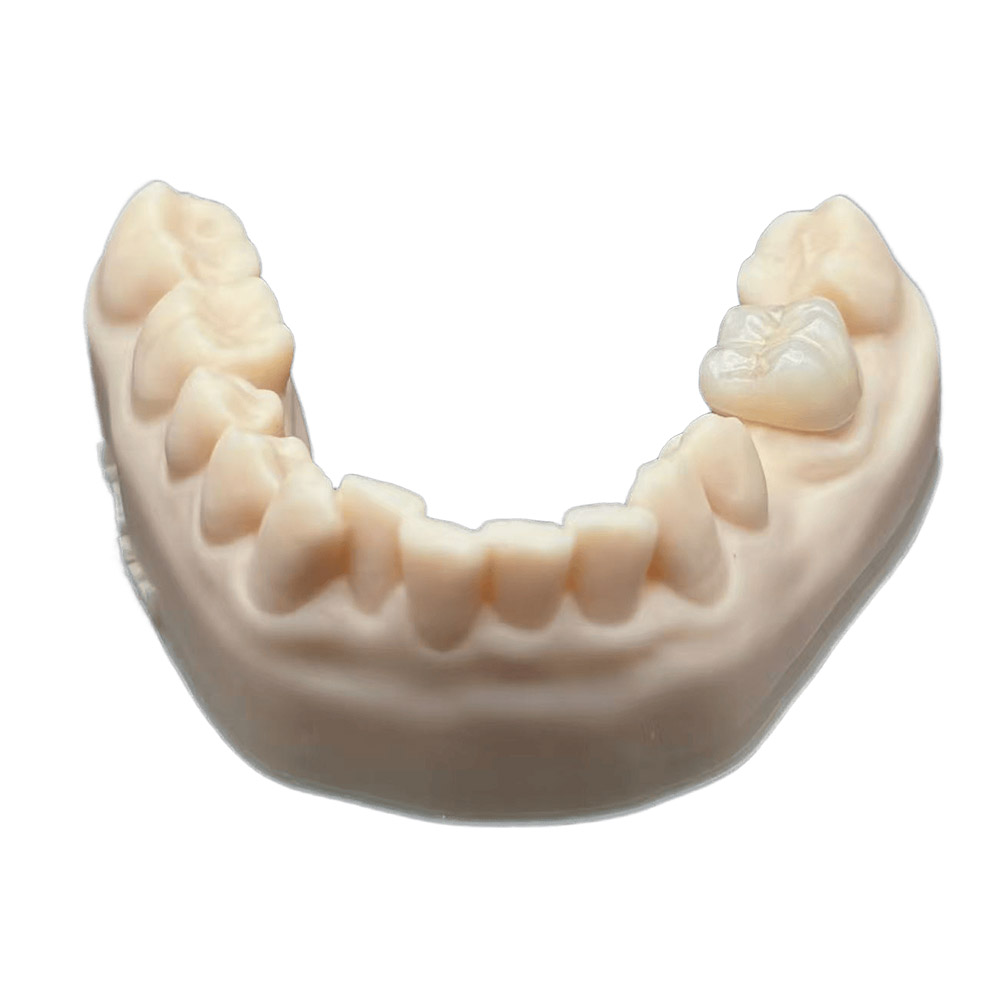
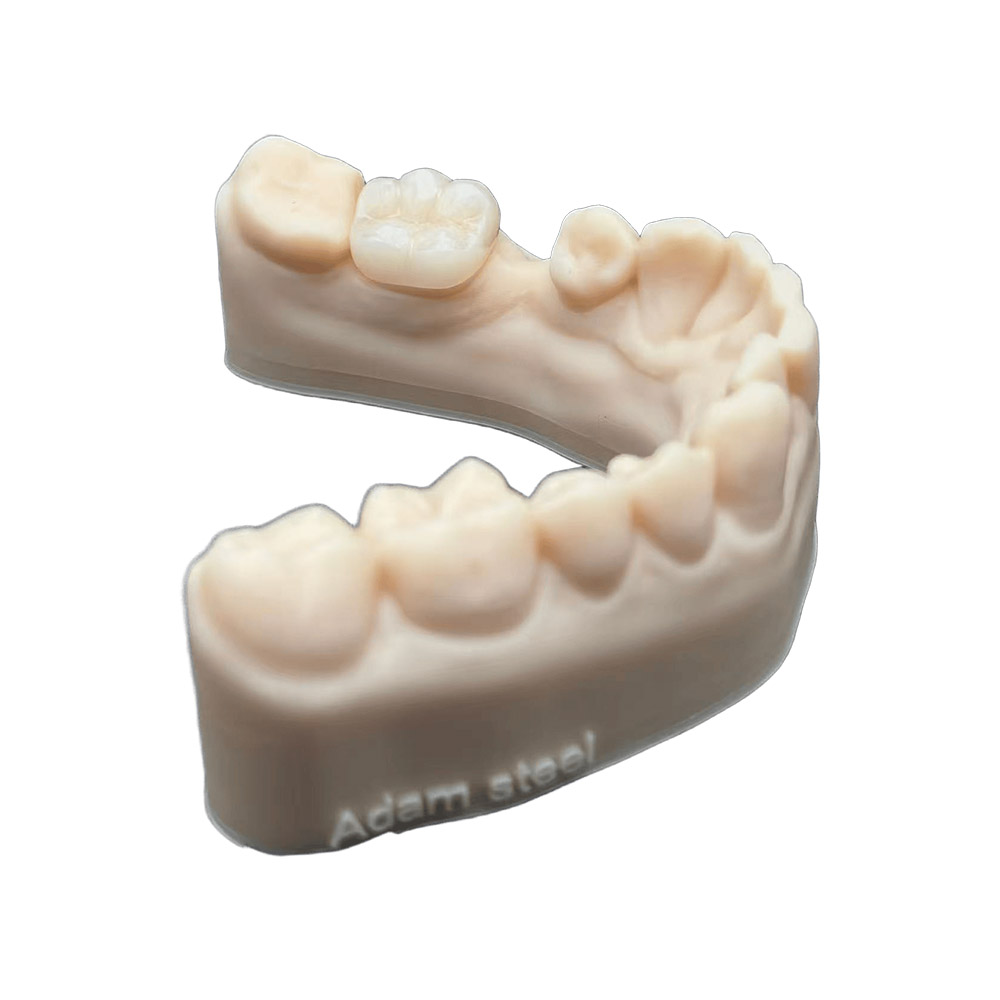
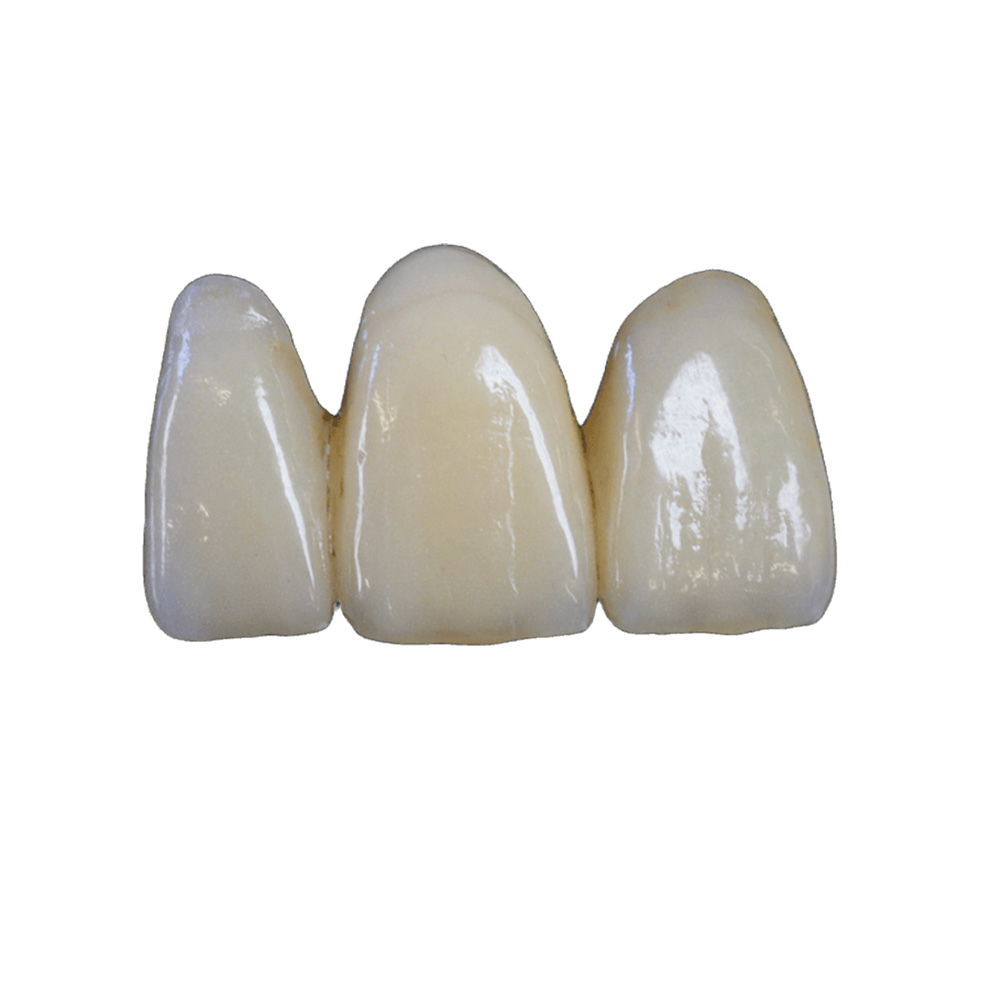
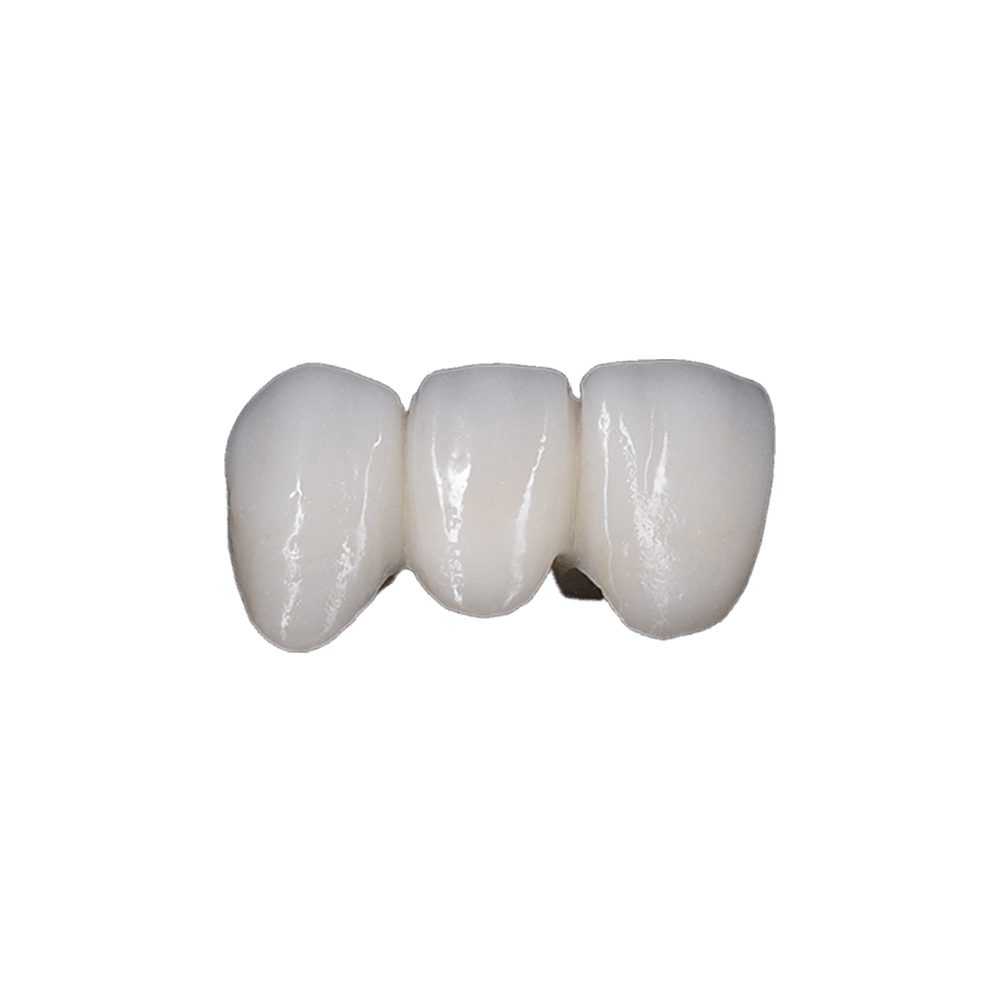
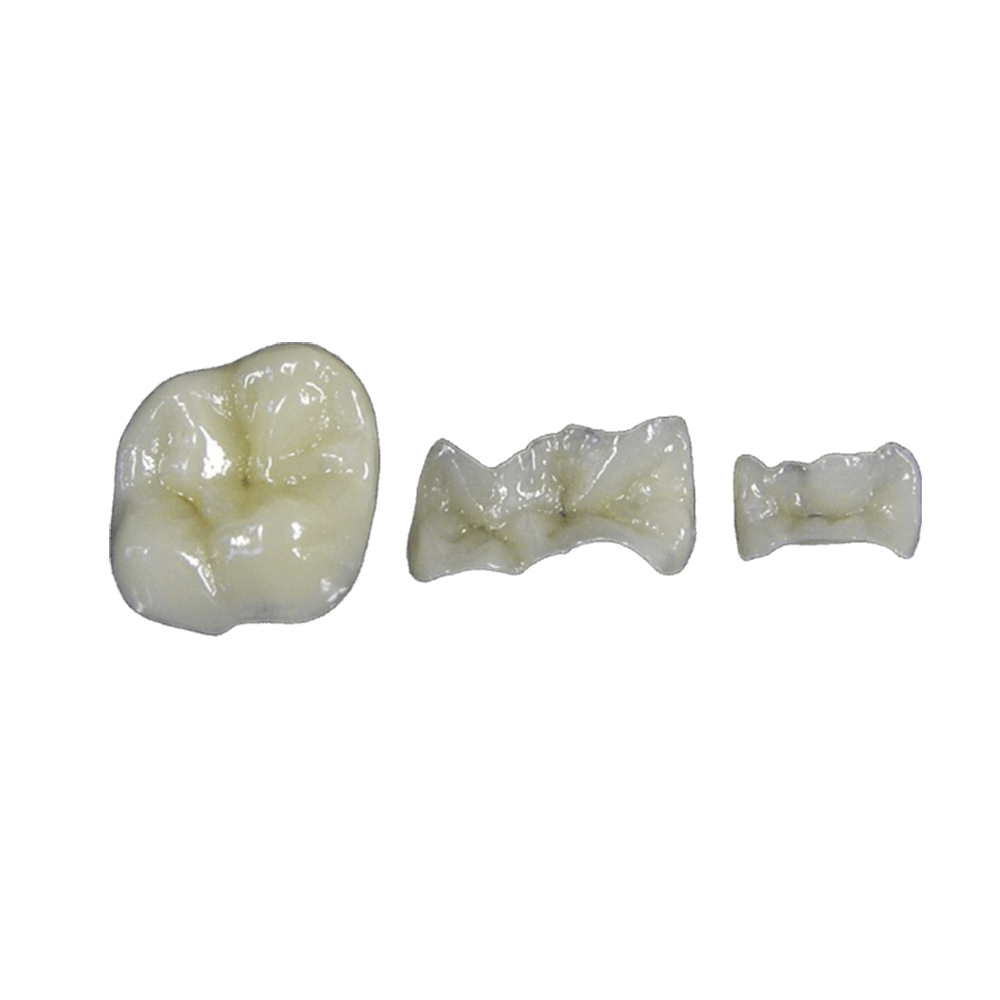
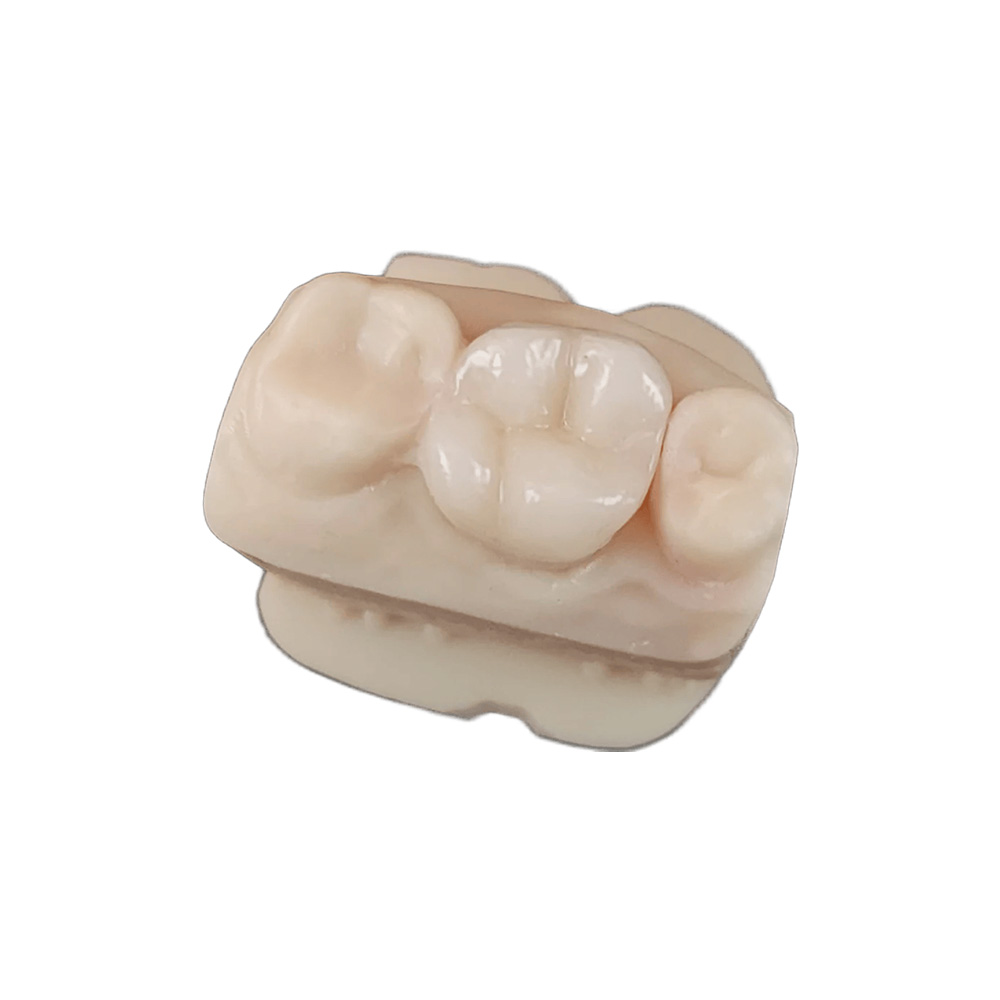
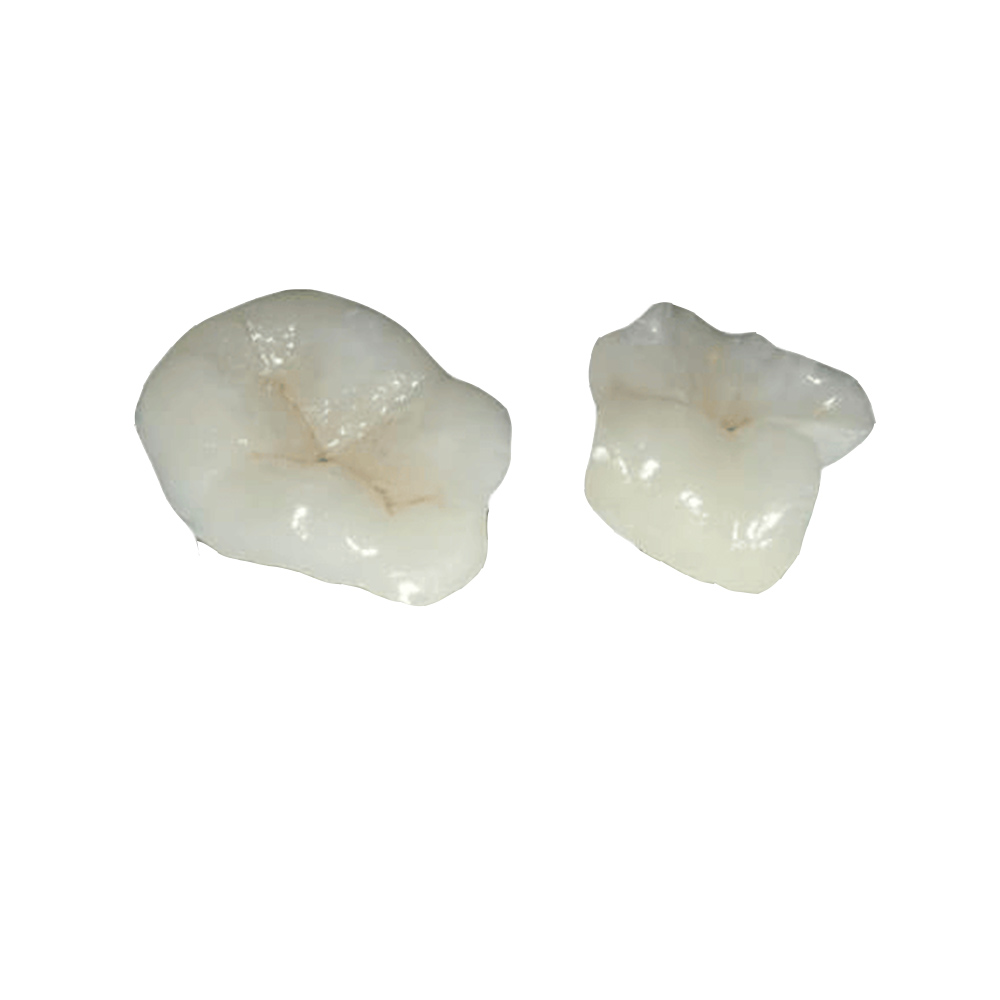
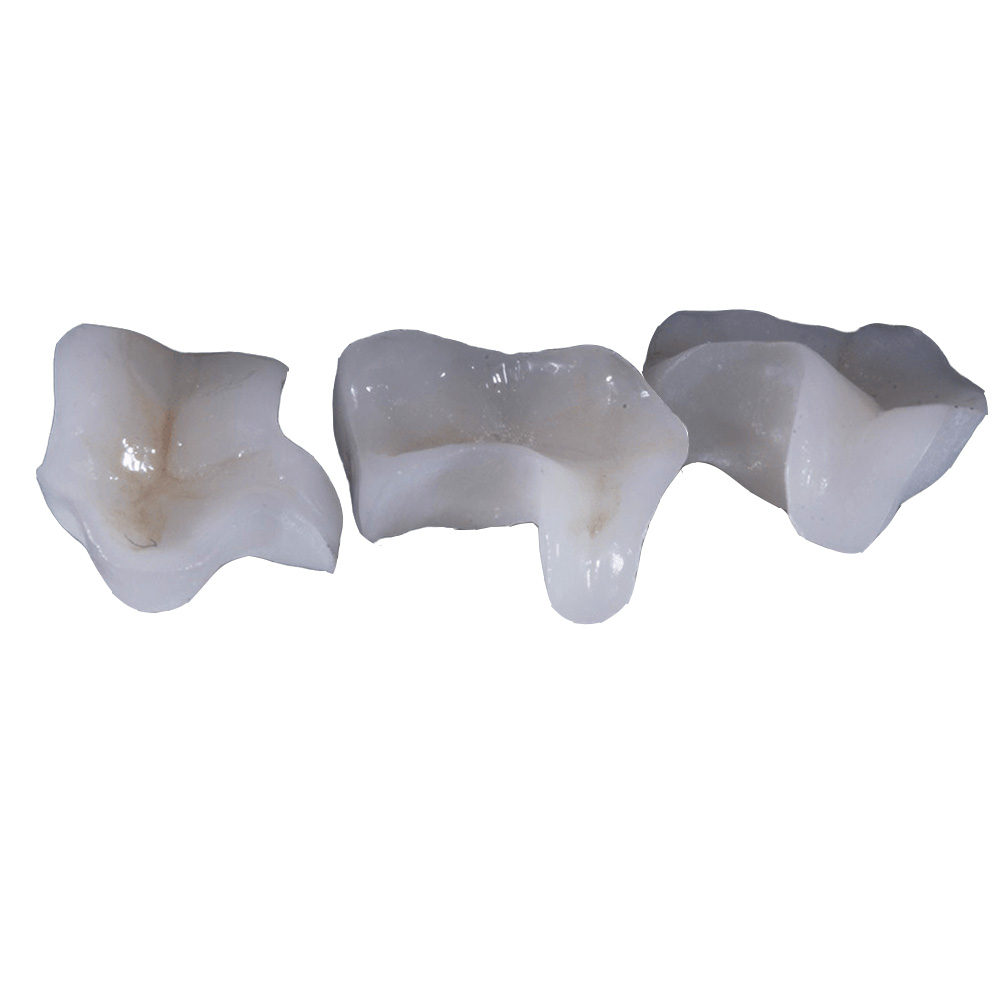
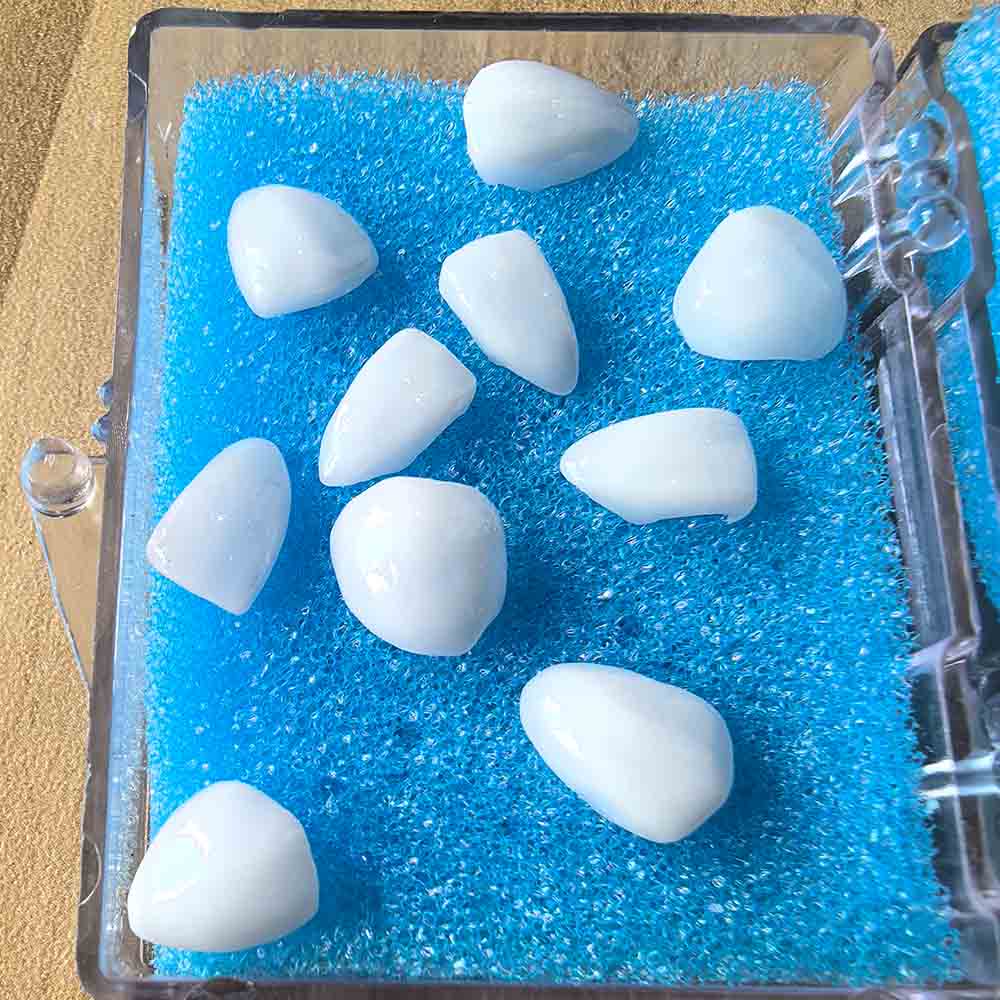
Options
| Pressed E.max | Lost-wax pressing for strength-controlled thin sections and consistent fit - the default for veneers and thin anterior work. |
|---|---|
| Milled E.max | CAD/CAM from lithium disilicate blocks for digital-first cases and inlays/onlays. |
| Layered finishing | Cut-back with hand-layered incisal porcelain for cases needing mamelons, opalescence and character. |
| Staining | Custom staining and glazing from photos, shade tabs or physical shade communication. |
| Restoration types | Anterior/posterior crowns, veneers, inlays, onlays, thin veneers. |
Specifications & industry guidance
| Parameter | Industry reference | Notes |
|---|---|---|
| Flexural strength | 360-400 MPa (lithium disilicate, crystallised) | About one third of zirconia - strongest as single units |
| Recommended minimum thickness | Veneer 0.3-0.5 mm · crown occlusal 1.0-1.5 mm | Adhesive bonding essential below 1 mm |
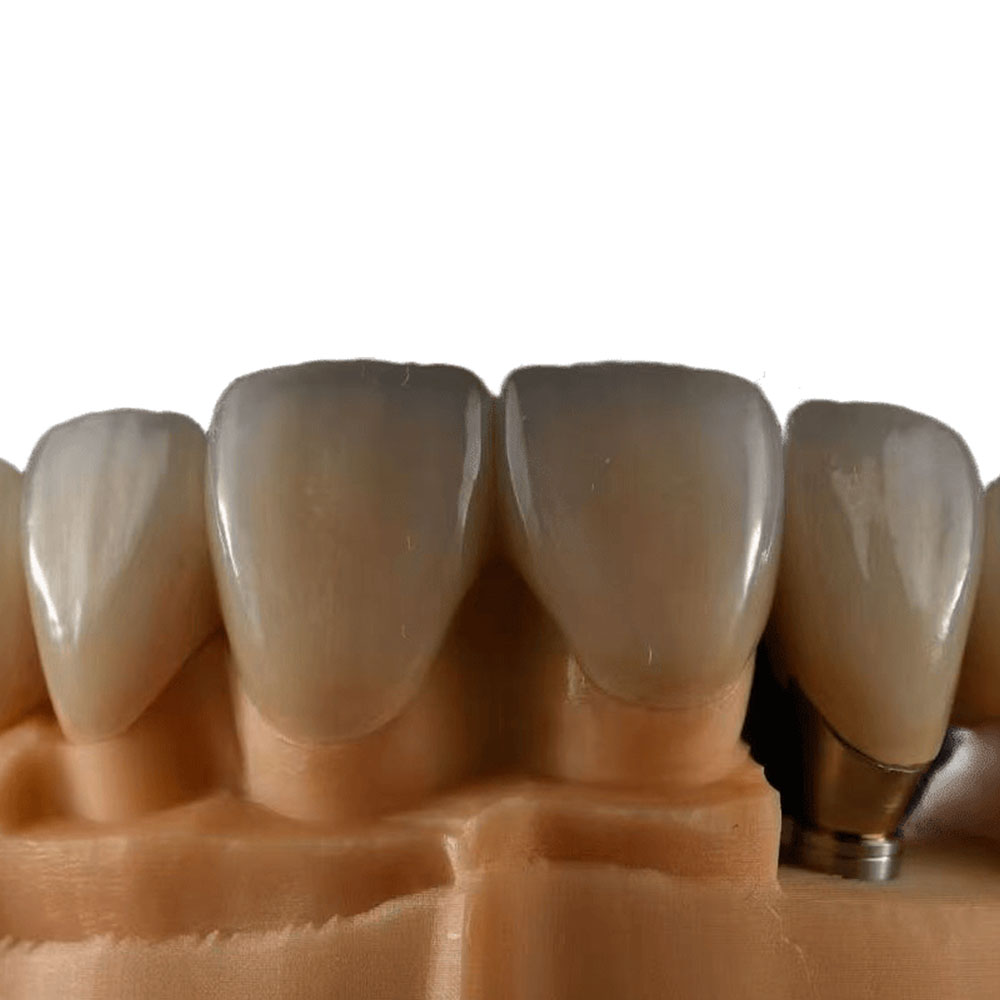
| Translucency | High - opacity, medium and HT blocks available | Best optics of the glass-ceramic family |
| Cementation | Adhesive resin cement with enamel/dentin conditioning | Bonding is what carries thin preparations |
| Typical indications | Anterior crowns, veneers, inlays/onlays, 3-unit bridges up to premolar region | Not advised for molars or heavy bruxism |
Practical guidance for your prescriptions
- Keep the finish line in or near enamel wherever possible - adhesive bonding to enamel is the strongest interface.
- For deep subgingival margins, consider zirconia; E.max relies on bonded enamel.
- Send prep photos with the case: shade choice for thin veneers depends on stump colour.
- Opposing porcelain or heavy wear patterns should be flagged - glass ceramics abrade opposing enamel less than zirconia but chip more easily under point loads.
Reference figures are widely accepted industry values for the material/system class - case-specific parameters are confirmed at design. Reviewed by the Istar case coordination team.
Indications & limits
E.max is not the answer everywhere, and we will say so: for molar crowns on bruxers, long-span bridges, or cases with insufficient clearance, our technicians will recommend zirconia before production starts.
Masking a dark stump needs thickness - a same-shade additive case does not. Include the prep depth and target shade so the material and thickness are decided together, not argued at try-in.
What to submit with your case
- STL scan or impression of prepared tooth and opposing arch
- Rx form with restoration type, shade and thickness constraints
- Stump shade note (or photo) for discoloured preparations
- Reference photos with shade tab for single anterior units
- Wax-up or design file if you want to drive the shape
How the case is made & checked
Shade is verified under standardised light sources before and after porcelain work. Fit, contacts and occlusion are inspected at the same checkpoints as all fixed work, with records retained per case.
Production time & shipping
E.max restorations run on our standard crown-and-bridge workflow (2-3 lab days for routine cases); aesthetic layering cases are scheduled with the ceramic department and confirmed at acceptance. Design approval and missing data do not count toward production time; shipping is separate.
Real cases
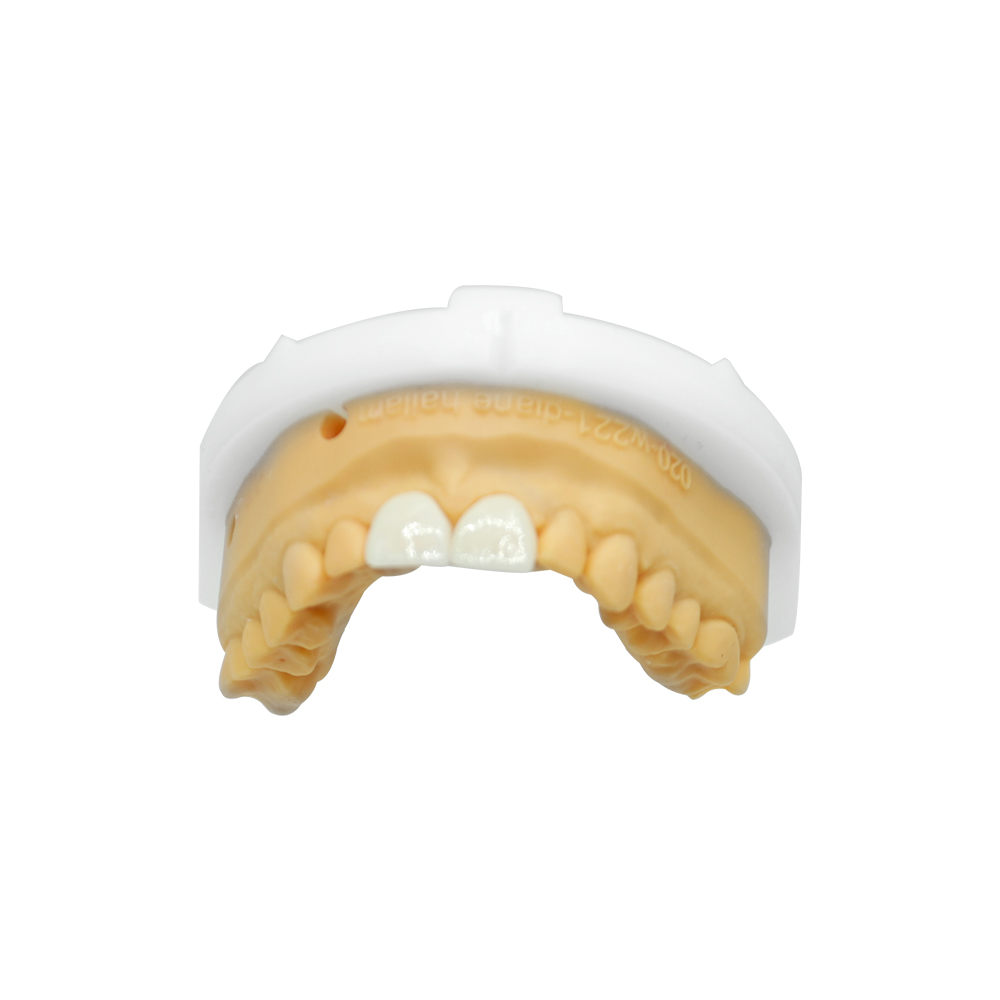
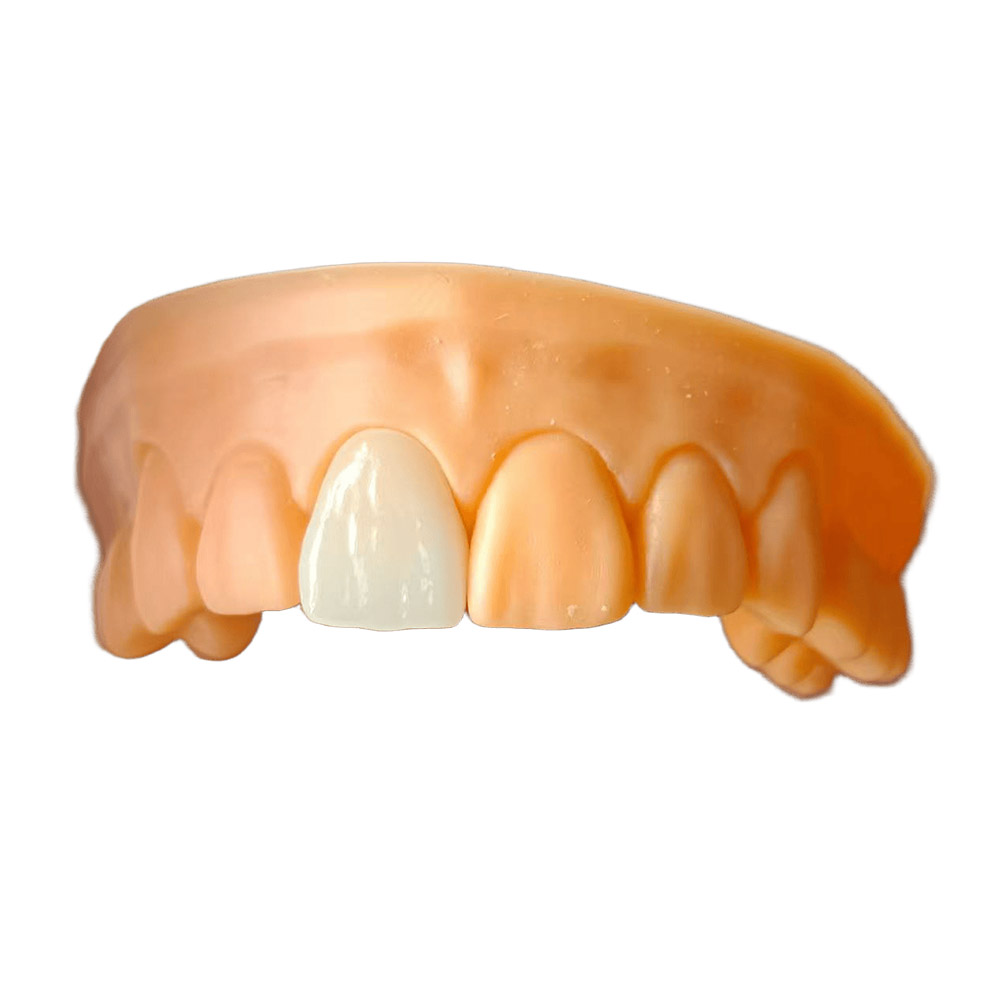
Single central veneer matched from photos
A clinic sent a single maxillary central with a preparation adjacent to a natural incisor and no possibility of a try-in visit. Communication ran entirely through photos with a shade tab in frame; the pressed E.max veneer replicated the neighbour's translucency band and surface texture. The client accepted the case on first try-in.
Pricing & fees
Priced per the B2B price list by restoration type and workflow (pressed or milled). Quotes confirm what is included - production, standard components, packaging - with courier freight and import duties billed separately. Custom staining is included in the standard aesthetic price.
If something goes wrong
Laboratory-side remakes are covered free of charge - see the full remake & warranty policy. Every remake starts with a root-cause analysis you are part of.
Frequently asked questions
E.max or zirconia for front teeth?
How thin can an E.max veneer be?
Are E.max restorations pressed or milled?
When is E.max the wrong choice?
What photos should I send for anterior E.max work?
How thin can an E.max veneer or crown be?
Ready to send your first case?
Request the price list or tell us about your first case - a named coordinator replies with the next step, not a sales script.
Get QuoteStart Your First CaseRelated pages
Dental Veneers · Zirconia Restorations · Start Your First Case